Entry · Ref -2W4UCUR
How a Bicycle Accident Lawyer in Denver Handles Insurance Bad Faith
- Posted
- 2026-09-23
- Last amended
- 2026-09-23
- Account
- @cashusqz447
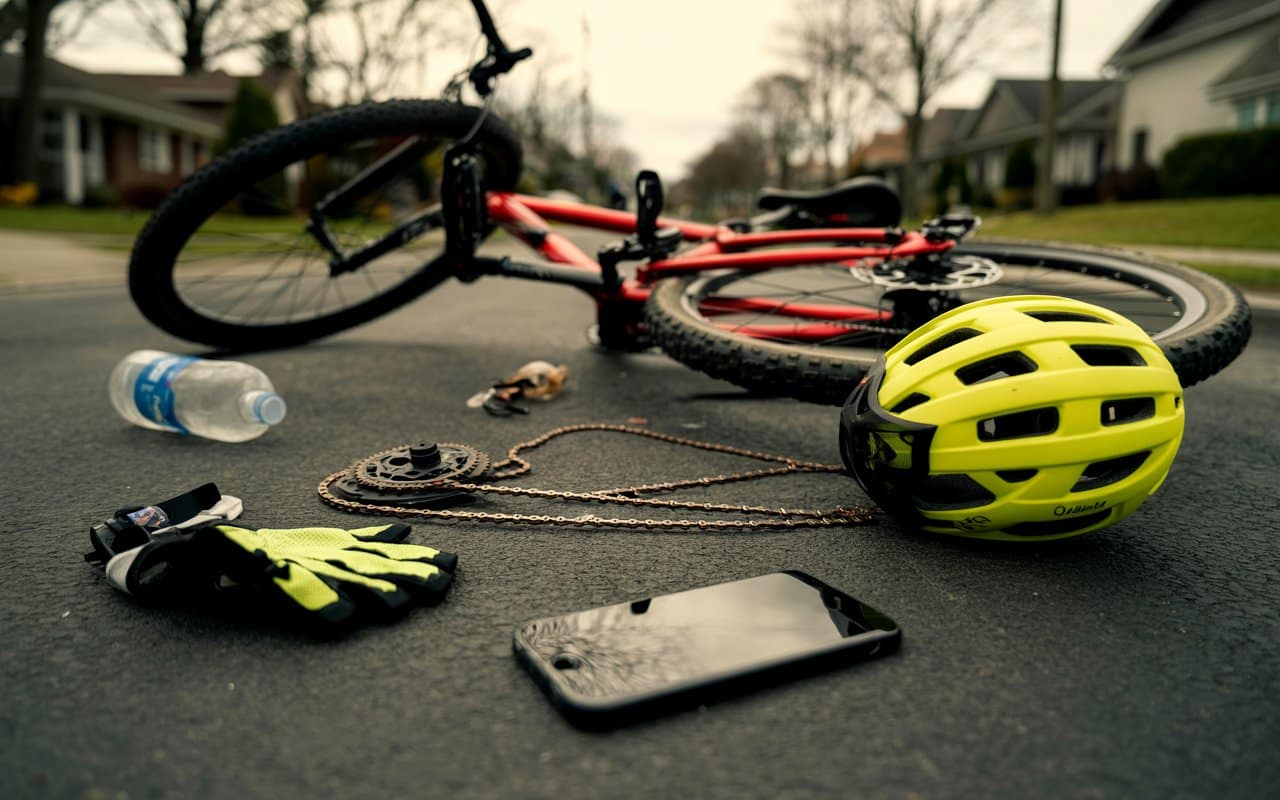
A bicycle crash can leave a rider with far more than a bent wheel and a hospital bill. The real trouble often begins after the emergency room visit, when the insurance claim that should help stabilize life turns into a second fight. Adjusters stop returning calls. Liability becomes "unclear" even when a driver turned across a bike lane. Medical records are requested again and again. A reasonable settlement offer never arrives. In some cases, the problem is not just a low offer or a slow process. It is insurance bad faith.
That distinction matters. A hard-fought negotiation is one thing. An insurer that unreasonably delays, denies, or undercuts a valid claim can create its own legal exposure. For injured cyclists in Colorado, that changes the strategy. A Bicycle Accident Lawyer Denver clients trust is not only evaluating broken bones, lost wages, and future care. The lawyer is also watching the insurer's conduct, preserving evidence of that conduct, and deciding when the case has expanded beyond the collision itself.
Insurance bad faith is one of those topics that sounds abstract until you see it up close. Then it becomes painfully concrete. A rider misses rent because med-pay benefits were not issued despite complete records. A family keeps floating deductible and pharmacy costs while the carrier asks for documents it already has. A person with a concussion is pushed to give a recorded statement designed to lock them into details they are still trying to remember. Those are not minor annoyances. They can change the trajectory of recovery.
What bad faith looks like in a Denver bicycle injury claim
Most people assume bad faith means an insurer flatly denying a claim with no reason. That can happen, but the more common pattern is subtler. The company creates friction. It moves just slowly enough to strain the injured person. It raises questions that were already answered. It treats clear liability as a mystery. It leans on the reality that a cyclist is usually dealing with pain, missed work, and uncertainty.
Colorado law gives policyholders and, in some situations, insured claimants meaningful protections against unreasonable delay or denial of benefits. That matters most in first-party claims, where the injured person is seeking benefits under their own policy, such as medical payments coverage or uninsured and underinsured motorist coverage. Third-party claims against the at-fault driver's insurer operate differently, and the bad-faith analysis is not identical. A seasoned bicycle accident lawyer in Denver understands that distinction from the first intake call, because it affects everything from evidence collection to deadlines to the choice of claims asserted in a lawsuit.
The facts of bike crashes also create recurring insurance problems. Drivers and insurers often exploit bias against cyclists. They suggest the rider "came out of nowhere," even when the collision happened in broad daylight. They turn ordinary urban riding into something reckless by framing lane positioning, speed, or visibility in the worst possible light. If there was no helmet, they may try to inflate that point beyond its legal relevance. If the rider filtered to the front at a light or moved through a complicated downtown intersection, the defense may use complexity to manufacture doubt.
Bad faith starts to enter the picture when the insurer is no longer just disputing a fair issue, but handling the claim unreasonably. There is a line between a legitimate investigation and a fishing expedition. Good lawyers know the difference because they see the pattern across cases.
The first signs a lawyer pays attention to
An experienced lawyer rarely labels conduct as bad faith on day one. That would be sloppy. Insurance cases turn on documentation and timing. What matters is not indignation, but proof. The attorney begins by asking a practical question: if I had to explain this claim file to a judge or jury a year from now, what would the timeline show?
That means every communication matters. When did the client notify the carrier? When did the carrier acknowledge the claim? What records were requested, and when were they supplied? Did the adjuster explain why more information was needed? Was there a written basis for delay? Was the company evaluating the claim under the right coverage? These details decide whether a case looks like ordinary friction or something more serious.
Certain patterns raise concern quickly:
- repeated requests for records already provided
- long gaps in communication with no explanation
- shifting reasons for delay or denial
- pressure tactics aimed at securing a cheap early statement or release
- refusal to evaluate obvious damages despite complete information
Even then, good lawyers keep their heads. Insurance claims are not assembly lines. A severe bike crash involving a traumatic brain injury, multiple providers, or disputed future treatment can take time to value properly. There are also legitimate issues that must be sorted out, including comparative negligence, policy limits, stacked coverage questions, and whether the at-fault driver was working at the time of the crash. The point is not that delay always equals bad faith. The point is that delay without reasonable support can.
Why bicycle cases are especially vulnerable to unfair insurance handling
Bicycle collisions often involve asymmetry from the start. The rider is physically exposed, so injuries can be severe even at modest vehicle speeds. Soft tissue injuries can be substantial. Shoulder damage, wrist fractures, facial trauma, pelvic injuries, and concussive symptoms are common. Yet property damage may look minor compared to a car wreck because the vehicle involved is a bike, not another two-ton machine. Some insurers quietly use that mismatch to minimize the claim.
There is also a perception problem. Many jurors like cyclists in the abstract and blame them in the abstract at the same time. Adjusters know that. They know a rider in bright gear on a road bike may be viewed differently from a parent pedaling home from work on an e-bike. They know a downtown lane merge can be hard to explain. They know that a driver who says "I never saw him" sounds sympathetic unless the case is developed with precision.
That is why a Bicycle Accident Lawyer Denver claimants hire often starts by rebuilding the crash in practical terms. Not theatrically, but concretely. Sight lines. Traffic signal sequencing. Lane markings. Skid evidence. Vehicle damage. Helmet damage. Body position at impact. Phone records if distraction is suspected. Surveillance footage from nearby storefronts. App-based ride data if the cyclist was tracking the ride. The stronger the liability picture, the less room the insurer has to drag the matter into the gray.
I once saw a case where the entire defense theory rested on the idea that the cyclist darted into the lane unexpectedly. A traffic camera from half a block away showed the rider traveling steadily and predictably for several seconds before the turn. The driver simply cut across. Once that footage surfaced, the liability argument changed overnight. What did not change was the insurer's delay. It took months, several redundant record requests, and a formal pressure campaign before the claim moved. That is the kind of file where a lawyer begins evaluating not just the crash claim, but the handling itself.
Building the bad-faith record from the beginning
The strongest bad-faith cases are usually built quietly, long before anyone uses the phrase in a demand letter. Lawyers who handle these matters well do not rely on outrage. They create a disciplined paper trail.
Every phone call should be memorialized. Every packet of records should be sent in a way that proves receipt. Every promise by the adjuster should be matched against the calendar. If the company says it needs two weeks to review updated treatment notes, the lawyer notes the date and follows up on day fifteen. If the reason for delay changes, that shift gets documented too.
This part of the work is less dramatic than depositions or trial testimony, but it wins cases. Insurance bad faith often lives in the ordinary business habits of a claim file. A missed response here. An unsupported denial there. A pattern of asking for "just one more thing" after enough information existed to pay benefits. Juries understand that pattern because it mirrors what people encounter in other bureaucratic systems. The lawyer's job is to make the pattern visible and undeniable.
That documentation also protects the client from a common problem in bicycle cases: being maneuvered into a misleading narrative. Adjusters may ask broad questions about the rider's route, speed, clothing, traffic familiarity, or prior crashes. Some of those topics are fair. Some are designed to invite ambiguity that can later be used against the claimant. Counsel helps narrow the exchange to what is relevant and ensures the insurer cannot later pretend the client was evasive when the problem was really overreach.
The difference between first-party and third-party fights
This is where legal strategy gets https://daltonesuf057.northvaledigest.com/posts/denver-bicycle-accident-lawyer-guide-to-proving-fault-in-a-crash more technical, and it matters a great deal. If the dispute is with the at-fault driver's insurer, the claim is generally about negligence and damages. The insurer owes duties to its own insured, not the injured cyclist in the same way it would in a first-party relationship. That means the path to a true bad-faith claim is usually different and more limited.
If the cyclist is making a claim under their own policy, especially uninsured or underinsured motorist coverage, the picture changes. Now the injured person is seeking benefits they paid for. The insurer cannot hide behind an adversarial posture while simultaneously holding first-party obligations. It still has the right to investigate and evaluate the claim. It does not have the right to do that unreasonably.
This distinction surprises many clients. They assume "insurance is insurance." In practice, the lane you are in matters. A Denver lawyer handling a serious bike injury case often pursues both tracks at once: the liability claim against the driver and the first-party claim under the cyclist's own coverage if available. The negotiation posture, the deadlines, and the bad-faith analysis can be different in each lane, even when the medical facts are identical.
When a denial is legitimate, and when it is not
Not every denied claim is wrongful. A lawyer who tells clients otherwise is selling emotion, not judgment. There are real coverage disputes. Policies have terms. Medical causation can be messy, especially if the rider had a prior neck, back, or concussion history. Some treatment is easier to defend than other treatment. Future damages can be uncertain. A rider who returned to work quickly but later deteriorated may face skepticism that needs to be answered with strong medical evidence.
The key question is not whether the insurer took a position the client dislikes. The question is whether the insurer had a reasonable basis for that position and whether it handled the evaluation fairly. A company can be wrong without acting in bad faith. It can also act in bad faith even while raising one point that sounds superficially reasonable. Good lawyers resist the temptation to oversimplify because courts and juries expect nuance.
One common example involves underinsured motorist claims after a bike crash. Suppose the at-fault driver carries modest limits and the cyclist's damages are clearly much higher. The carrier providing underinsured motorist coverage may still want proof of the extent of future care, permanent impairment, and wage loss before paying full value. That may be fair. But if the company sits on complete orthopedic records, ignores a treating neurologist's restrictions, and refuses to explain its valuation, the issue starts to shift from hard bargaining to unreasonable conduct.
How a lawyer applies pressure without losing credibility
There is a balance here. Threatening bad-faith litigation too early can backfire. It can make a lawyer look reactive, and it can distract from the merits of the injury claim itself. On the other hand, waiting too long allows a poor claim file to harden.
A strong attorney usually escalates in stages. First comes a clear, organized presentation of liability, injuries, and coverage. Then, if the insurer drifts or stonewalls, counsel sends precise follow-up letters that identify what has already been provided and ask for a decision by a concrete date. If the delay continues, the lawyer may demand the factual and policy basis for the insurer's position in writing. That request is not just posturing. It forces discipline. Weak reasons tend to look weaker when they must be written down.
When the facts support it, counsel may also separate out benefits that should be paid now from damages that can still be debated later. This is especially important where medical payments coverage or undisputed portions of a first-party claim are concerned. Some insurers behave as though every element of the claim must be settled globally before any money moves. That is not always defensible. A lawyer who understands the distinction can turn a vague dispute into a focused one.
The evidence that tends to matter most
In bicycle bad-faith cases, some forms of proof carry unusual weight because they cut through the insurer's favorite fallback arguments. Video is at the top of that list. Dash cam footage, traffic cameras, doorbell systems, and commercial surveillance often disappear quickly, so early preservation is critical. Photos of the bike, especially pedal position, wheel deformation, light setup, and impact points, can help reconstruct movement and visibility. Ride data from a cycling computer or fitness app can corroborate speed and route, though it has to be interpreted carefully and not treated as gospel.
Medical chronology matters just as much. In my experience, insurers exploit gaps in treatment aggressively, even when those gaps have mundane explanations. The rider could not get a specialist appointment for six weeks. Physical therapy was delayed by work schedules. A concussion made scheduling difficult. The lawyer's job is to close those interpretive gaps before the insurer fills them with suspicion.
The most effective case files often include these elements:
- a clean timeline of treatment, symptoms, and work disruption
- a liability package that explains the roadway and traffic movements clearly
- proof of all communications with the insurer, including dates and attachments
- documentation of out-of-pocket losses and day-to-day limitations
- medical opinions that address causation and future impact in plain language
That last point is understated but important. Technical medicine loses force if no one can explain why it matters. A concise doctor letter that connects the crash to continuing vestibular symptoms or loss of grip strength can be more useful than a stack of raw records left for an adjuster to interpret selectively.
How litigation changes the bad-faith dynamic
Filing suit does not automatically create leverage, and it does not guarantee an insurer will become reasonable. What it does is impose structure. Deadlines tighten. Discovery obligations attach. Internal decision-making that once happened invisibly may become discoverable in part, depending on the claims involved and how the case is pleaded. The insurer has to think beyond settlement posturing and consider how its file will look under scrutiny.
In a bike case, litigation also allows the attorney to develop liability and damages more fully. Depositions can expose weak driver testimony, especially where the motorist insists the cyclist was unseen despite clear sight lines. Corporate representative testimony may reveal how the claim was handled, who made key decisions, and what information was available at the time those decisions were made. That can be significant in a bad-faith dispute because reasonableness is measured by what the insurer knew or should have known when it acted, not by explanations invented later.
There are trade-offs. Litigation costs money. It takes time. It can increase stress on a client who would rather move on. And not every bad-faith issue should eclipse the injury case. Sometimes the wiser move is to secure a strong recovery on the underlying claim and avoid turning a manageable dispute into a sprawling lawsuit. Other times, especially where the insurer's conduct has caused real financial harm beyond the crash itself, pursuing the bad-faith angle is exactly what accountability requires.
The client counseling piece that often gets overlooked
A good Denver bicycle accident lawyer does more than draft letters and argue law. They manage expectations in a way that helps the client make sound decisions. That can be difficult in bad-faith situations because the client is often angry, and understandably so. They were hit by a driver, then treated like a problem by a company that was supposed to evaluate the claim fairly. The instinct is to fight every point at maximum volume.
Usually, the better path is disciplined patience. Not passive patience, but strategic patience. Keep treating. Keep documenting. Do not speculate to adjusters. Do not post about the crash online. Do not assume every rude or sloppy claim interaction equals a winning bad-faith case. At the same time, do not normalize conduct that is clearly outside the bounds of fair handling.
The best outcomes often come from clients who understand both truths at once. The case needs to be developed carefully, and the insurer's conduct needs to be watched carefully. Those tracks support each other.
Why local experience matters in Denver bicycle cases
Denver is not just any venue for bike injury claims. Road design varies sharply from one neighborhood to another. So do cycling habits, traffic density, and the kinds of collisions that occur. A downtown dooring case has different practical proof issues than a suburban right-hook collision near a trail crossing. Snow, sand, potholes, and seasonal lane visibility can complicate fault analysis. Local adjusters and defense lawyers also know which arguments tend to resonate here, which means claimant's counsel should know them too.
That local familiarity matters when confronting insurance bad faith. The lawyer who has handled Denver bicycle cases before knows when an insurer is raising a genuinely case-specific issue and when it is recycling the usual anti-cyclist script. They know how to present a rider's conduct as ordinary and lawful rather than niche or aggressive. They know which intersections generate confusion and which roadway markings matter. Those details strengthen the underlying claim, and a stronger underlying claim makes unreasonable insurance behavior easier to expose.
When people search for a Bicycle Accident Lawyer Denver offers, they are often thinking about courtroom skill or settlement value. They should also be thinking about claim handling experience. A lawyer who understands insurance bad faith can spot problems early, document them properly, and use them to protect the client rather than merely complain about them after the fact.
A bike crash already puts enough on a rider's shoulders. The legal job is not just to demand compensation. It is to keep the insurance company from turning recovery into a second injury.